Washington

Game Bird Hunting

Game Bird Hunting

Duck Species Identification

Last Updated: October 3, 2025

Top Ducks Harvested

These four dabbling species account for 80% of the total harvest statewide.

Mallard

Illustration of a pair of mallards in flight, showing the male with a green head and the female with mottled brown feathers, a common sight across North America.
Male and female mallards in flight — one of the most recognizable and widespread duck species in North America.

Green-winged Teal

Illustration of a pair of green-winged teal ducks in flight, with the male showing a chestnut head and green eye patch, and the female in mottled brown plumage.
Green-winged teal pair in flight — the male with striking chestnut and green markings, and the female in subtle brown tones.

Northern Pintail

3-bird daily limit.

Illustration of a pair of northern pintail ducks in flight, with the male showing a sleek brown head, white neck, and long pointed tail, and the female in mottled brown plumage.
Northern pintail ducks in flight — the male with a long pointed tail and crisp markings, alongside the female’s subtle brown tones.

American Wigeon

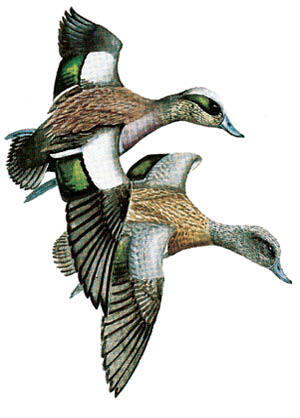
Illustration of a pair of American wigeon ducks in flight, with the male showing a white crown, green eye patch, and pinkish-brown body, and the female in mottled gray-brown plumage.
American wigeon ducks in flight — the drake with a striking white crown and green eye patch, alongside the hen’s softer brown plumage.

Diving duck Species

Species-specific bag limits apply—see Migratory Game Bird Seasons.

All 5 species occur within Washington wetlands and open waters.

Scaup season closed Oct. 11-31 Statewide.

Ring-necked Duck, Canvasback, and Redhead open Oct. 11-19 & Oct. 22 - Jan. 25.

Note: Scaup are included in allowable harvest species during Youth and Youth, Veteran and Active Military Special Hunt Dates.

Scaup

Closed Oct. 11-31 Statewide. 2-bird daily limit.

White wing stripe.

Illustration of a pair of scaup ducks in flight, with the male showing a dark head, chest, and white sides, and the female with brown plumage and a white patch near the bill.
Scaup ducks in flight — the drake with bold black-and-white contrast and the hen with her distinctive brown feathers and white bill patch.

Ring-Necked Duck

Gray Wing Stripe. "Gray is OK".

Illustration of two ring-necked ducks in flight, with the male showing a dark head, black chest, and white sides, and the female with brown plumage and a pale eye ring.
Ring-necked ducks in flight — the drake with striking black-and-white contrast and the hen with soft brown feathers and a distinct eye ring.

Canvasback

2-bird daily limit.

Illustration of two canvasback ducks in flight, with the male showing a red head, black chest, and white body, and the female in brown and gray tones.
Canvasback ducks in flight — the drake with a striking red head and white body, and the hen in soft brown and gray plumage.

Redhead

2-bird daily limit.

Illustration of two redhead ducks in flight, with the drake showing a red head, black breast, and gray body, and the hen in mottled brown tones.
Redhead ducks in flight — the male with a bold red head and gray body, and the female in soft brown plumage.

Drawings courtesy of Ducks Unlimited

Other Common Duck Species

Gadwall

Illustration of a pair of gadwall ducks in flight, showing the drake with gray and black plumage and the hen with mottled brown feathers, both displaying their distinct white wing patches.
Gadwall ducks in flight — males have gray and black plumage with a white wing patch, while females are mottled brown with the same distinctive wing markings.

Northern Shoveler

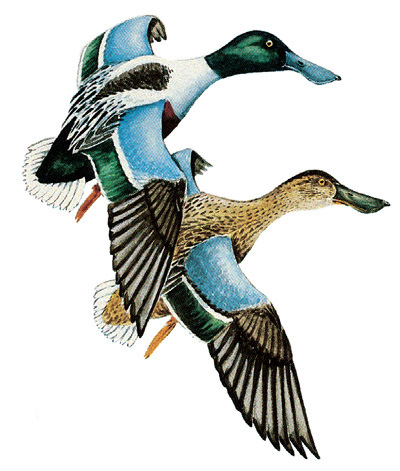
Illustration of a pair of northern shoveler ducks in flight, with the drake showing a green head, white chest, and chestnut sides, and the hen with mottled brown plumage. Both have distinctive wide, spoon-shaped bills.
Northern shoveler ducks in flight — males are easily recognized by their green head, white chest, and chestnut sides, while females are mottled brown. Both feature the species’ signature spoon-shaped bill.

Bufflehead

Illustration of a pair of bufflehead ducks in flight, with the drake displaying a striking white patch on the back of its dark head and contrasting black-and-white plumage, and the hen showing brown-gray feathers with a distinct small white cheek patch.
Bufflehead ducks in flight — males stand out with bold black-and-white markings and a large white head patch, while females are brown-gray with a small white cheek spot.

Wood Duck

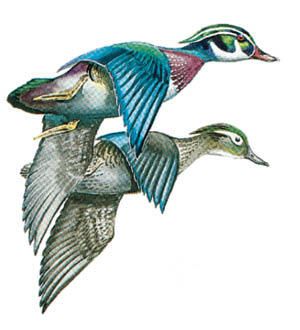
Illustration of a pair of wood ducks in flight, featuring the male with iridescent green, purple, and white plumage and the female with a gray-brown body and distinct white eye ring.
Wood ducks in flight — males are striking with colorful iridescent plumage, while females are more subtle in gray-brown with a white eye ring.

Ruddy Duck

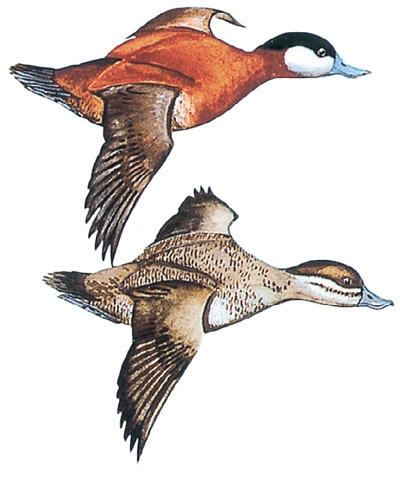
Illustration of a pair of ruddy ducks in flight, showing the male with bright chestnut plumage, sky-blue bill, and black-and-white head, alongside the female with mottled brown feathers and a faint facial stripe.
Ruddy ducks in flight — males stand out with chestnut bodies, blue bills, and bold head markings, while females are more camouflaged in brown with subtle facial stripes.

Sea Duck Species

Species-specific bag limits apply—see Migratory Game Bird Seasons.

Mandatory Harvest Report requirement in western Washington—due February 15th.

Scoter

3-bird daily limit.

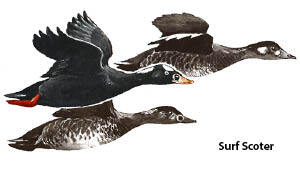
Illustration of surf scoters in flight, featuring a male with striking black plumage, colorful orange-and-white bill, and white head patches, alongside females with brown feathers and faint facial markings.
Surf scoters in flight — males are recognized by their bold black coloring and bright patterned bills, while females are brown with subtle face markings, common in coastal waters.
Illustration of white-winged scoters in flight, showing a male with dark plumage, bright orange bill, and distinct white wing patches, alongside a brown female with the same white wing markings.
White-winged scoters in flight — sea ducks recognized by their bold white wing patches, with males displaying dark feathers and orange bills, and females showing a brown plumage with the same wing flash.
Illustration of black scoters in flight, with the male showing all-black plumage and a bright orange knob on the bill, and the female displaying brown feathers with pale cheek patches.
Black scoters in flight — sea ducks recognized by the male’s striking orange bill knob and the female’s lighter brown plumage with distinctive pale cheeks.

Goldeneye

3-bird daily limit.

Illustration comparing Barrow’s goldeneye drake, common goldeneye drake, common eclipse drake, and hens of both species, showing differences in plumage and markings for waterfowl identification.
Barrow’s and common goldeneye identification guide — drakes, eclipse drakes, and hens illustrated side by side to highlight key plumage differences for waterfowl hunters and birdwatchers.

Long-Tailed Duck

2-bird daily limit.

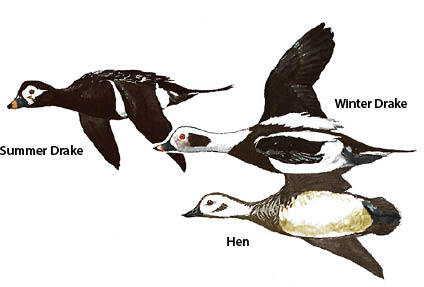
Illustration of long-tailed ducks showing a summer drake, winter drake, and hen, highlighting seasonal plumage changes and identification features for waterfowl hunters and birdwatchers.
Long-tailed duck identification guide — summer drake, winter drake, and hen shown with distinct plumage patterns to help waterfowl hunters and bird enthusiasts recognize the species year-round.

Harlequin Duck

Closed to harvest statewide, except for 52 permits (see Migratory Game Bird Season Summary for details).

Illustration of a pair of Harlequin Ducks in flight, showing the male drake with striking blue, white, and chestnut plumage and the brown female hen for waterfowl identification.
Harlequin Ducks — drake and hen in flight, highlighting the drake’s bold plumage and the hen’s subtle brown tones for easy waterfowl identification.

Other Duck Species Not Depicted

  • Cinnamon Teal
  • Blue-winged Teal
  • Eurasian Wigeon
  • Hooded Merganser
  • Common Merganser
  • Red-breasted Merganser