
Shrimp Rules
Shrimp
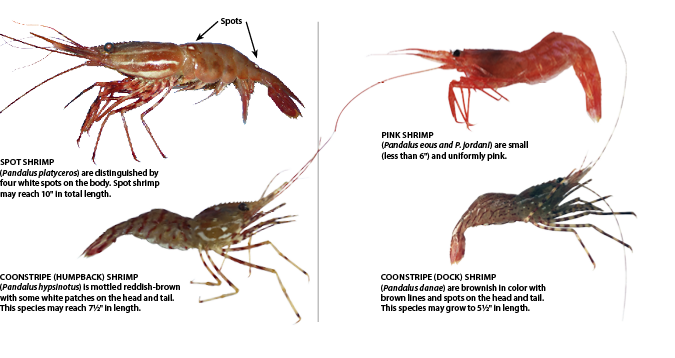
Spot (Pandalus platyceros), Coonstripe (P. danae and P. hypsinotus), Pink (P. eous and P. jordani).
Shrimp Daily Limits and General Rules
(See gear rules on Statewide Gear Rules)
Puget Sound (Marine Areas 5-13 and Marine Area 4 east of the Bonilla-Tatoosh line).
First opening date will occur in May.
- Daily limit of 80 spot shrimp.
- If retaining non-spot shrimp, all shrimp heads (spot and non-spot) must be retained in the field until ashore and finished fishing for the day.
- The minimum mesh size for shrimp pots is 1" mesh (see gear rules on Statewide Gear Rules).
- Daily limit of 10 pounds, heads and tails, of all shrimp species combined (maximum of 80 spot shrimp — if open for spot shrimp).
June 1 through October 15
- The minimum mesh size for shrimp pots is 1” mesh, unless the area is closed for spot shrimp, but open for coonstripe and pink shrimp, then the minimum mesh size for shrimp pots is ½" mesh (see gear rules on Statewide Gear Rules).
- In areas closed for spot shrimp, but open for coonstripe and pink shrimp, all spot shrimp caught must be returned to the water immediately.
Pacific Ocean (Marine Areas 1-3 and Marine Area 4 west of the Bonilla-Tatoosh line).
- Daily limit of 25 pounds, heads and tails, of all shrimp species combined (maximum of 200 spot shrimp). Shrimp heads may be removed, but must be retained while in the field, until ashore and finished fishing for the day.
- The minimum mesh size for shrimp pots is 1" mesh (see gear rules on Statewide Gear Rules).
All Areas
- Each harvester must have a separate container for their catch, either in their possession or identified with their name.
- No minimum carapace size.
- Maximum of two shrimp pots per person, and no more than four shrimp pots per boat.
Prior to harvesting, check the Shellfish Rule Change toll-free Hotline, (866) 880-5431, or
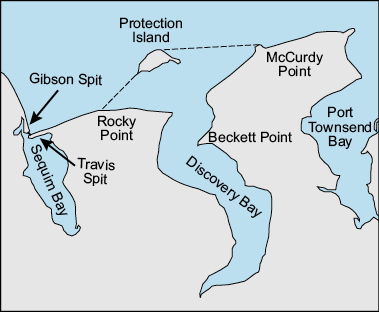
Discovery Bay Shrimp Area: Waters south of a line from McCurdy Point on the Quimper Peninsula to the northern tip of Protection Island then to Rocky Point on the Miller Peninsula and all waters of Discovery Bay.
Season Information |
||
Area |
Species |
Season / Open Days And Times / Additional Rules |
Marine Areas 4 (east of Bonilla-Tatoosh line), 5, 6, 7 East, 7 South, 7 West, 8-1, 8-2, 9, 10, 11, 12, Discovery Bay Shrimp Area. Marine Areas 7 East, 7 South, and 7 West |
All Species |
For shrimp season open dates and times go to: https://wdfw.wa.gov/fishing/shellfishing-regulations/shrimp or refer to the toll-free shellfish rule change hotline (866) 880-5431. The dates for the upcoming season will be announced and available in late March or early April to accommodate co-management obligations, account for extreme tides, and complete pre-season test fishing and quota setting. |
Marine Area 13 |
All Species |
Closed to spot shrimp harvest in 2023. |
Pacific Ocean |
All Species |
Year-round. Open daily. |