

A Message From the Executive Director
Opening days are always special, and for us, each season brings a different opener. As the weather cools off a little, hunters think about the upcoming deer and dove seasons. As the weather continues to cool down, there are opening days for bear and small game, and let’s not forget about waterfowl. Once spring starts coming around, thoughts often turn to wild turkeys. Unless you are an angler.
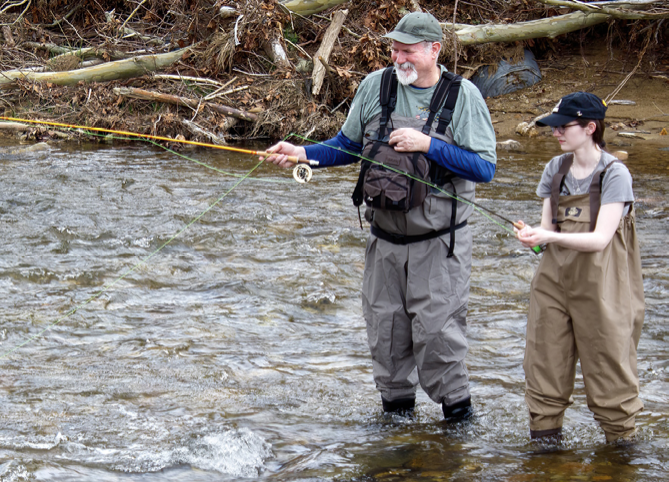
Springtime in North Carolina’s mountains is home to one of the most anticipated opening days for anglers from across the state — the opening of Hatchery-Supported trout season. On the first Saturday in April, thousands of anglers will line streams to get a chance to wet a line and catch some prized rainbow, brook or brown trout. Hopefully, many of those trout will end up on a smoker, in a frying pan or under a broiler as a meal or two for the anglers who worked hard to catch them. That is exactly why so many of our staff spend countless hours raising and stocking those trout into so many streams across the state.
Like much of Western North Carolina, trout fishing has been impacted by Helene. The Armstrong State Fish Hatchery was significantly damaged, rivers were completely rerouted and roads that access streams were washed out. But, as I have said before, Western North Carolina is resilient. By the time you read this, repairs at Armstrong should be nearing completion and the Commission will be purchasing a new hatchery.
The repairs to Armstrong and adding a new hatchery will be critical to maintaining trout production as we will begin renovating Bobby N. Setzer State Fish Hatchery after a year’s delay due to the damage to Armstrong. Setzer was built in the late 1950s, and its infrastructure is well past its useful life. Staff are working hard to find alternate sources of trout while the hatchery is under repair, including getting trout from other states and purchasing from private hatcheries. However, we expect an approximately 65% reduction in stockings for Hatchery Supported and Delayed Harvest waters for approximately three years starting in 2026. I know this seems like a long time, but it is significantly shorter than if we did not renovate the facility and suffered a catastrophic failure.
Along with the renovations, fisheries staff will update the N.C. Trout Management Plan to incorporate angler input and help direct the use of the expanded capacity for trout production to guarantee many more successful opening days in the future.
Kyle Briggs
Executive Director
Scan the QR code to learn more about trout in North Carolina.

