

Shellfish Areas
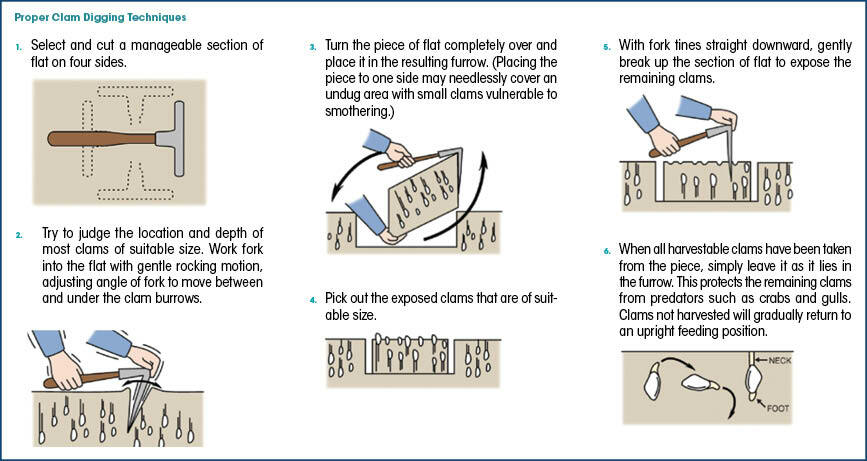
Recreational harvest of various types of shellfish is an activity enjoyed by many New Hampshire residents. State licenses are required to harvest softshell clam and oysters; other shellfish may have certain restrictions on taking, but require no license. Softshell clams are dug from flats at or near low tide. For advice on proper clam digging techniques, see below. Oysters are brought up from their shallow beds using tongs or simply picked up by hand. For season, limit and take requirements for shellfish, see Shellfish.
Shellfish Maps Online
Shellfish harvesters have a great tool making it easier to find out what areas are open for harvest. You can now get updates on the status of the clam flats and other coastal areas, including red tide alerts, on your mobile phone or computer via an interactive website hosted by the N.H. Department of Environmental Services. Interactive maps show areas open for harvest. Use a personal computer to sign up for free text or email alerts at www4.des.state.nh.us/CoastalAtlas/Atlas.html The information matches the weekly Clam Hotline message, but comes to you on the devices you use.
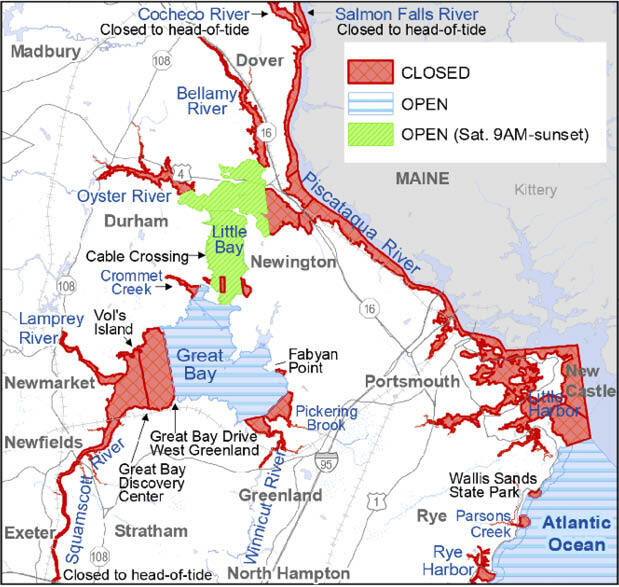
Great Bay Shellfish Open/Closed Areas
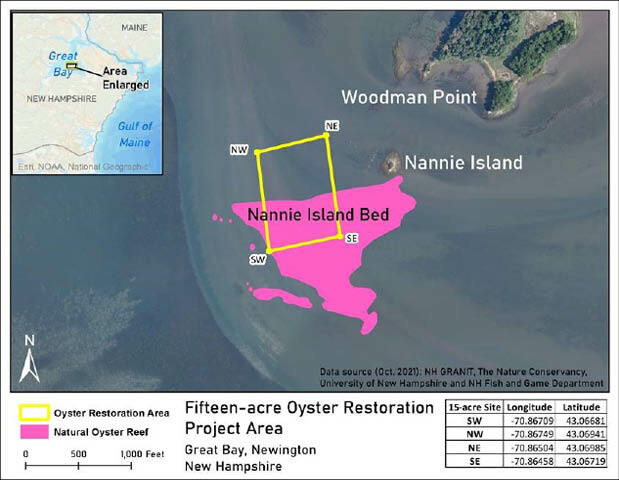
Oyster Reef Restoration Area
A fifteen-acre area near Nannie Island in Great Bay, shown on the map above, is closed to harvesting of clam, oyster, and other bivalve mollusk for a five-year period that extends through October 31, 2026. The closed area is marked with orange buoys labeled “Oyster Restoration Site” on the four corners of the site. The existing Woodman Point and Nannies Island natural oyster reef beds identified on the map remain open to shellfish harvesters. For more information, go to fishnh.com/marine
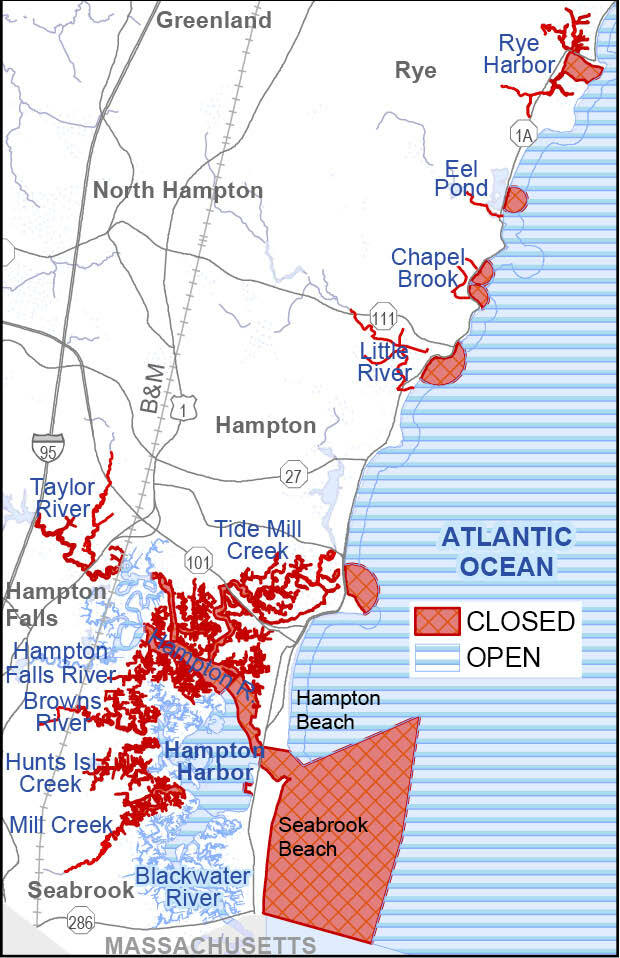
N.H. Coast Shellfish Open/Closed Areas
Clam Flat Hotline
For the latest information on closed and open shellfishing areas, call Fish and Game’s Clam Flat Hotline at 1-800-43-CLAMS. The hotline is updated weekly on Friday afternoons, but harvesters should check back frequently for unscheduled updates. For those harvesting in Little Bay and Bellamy River open areas check the hotline after 9 a.m. on Saturdays for any updates. Information is also posted at fishnh.com and on the NH Coastal Atlas at www4.des.state.nh.us/CoastalAtlas/Atlas.html.
Did You Know?
Only New Hampshire residents are allowed to purchase licenses for the taking of clams and oysters.