

Regulations by Species
Dove
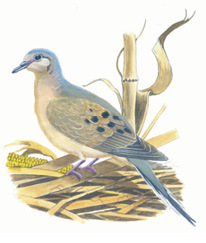
Statewide Dove Hunting Seasons
First Segment
September 2–October 22
Hours
September 2
- 12:00 noon until sunset.
September 3–October 22
- One-half hour before sunrise until sunset.
Second Segment
November 18–26
Third Segment
December 22–January 20
Hours for Second and Third Segments:
One-half hour before sunrise until sunset.
Bag Limit
15 per day, 45 in possession. Composed of mourning doves and white-winged doves, singly or in combination.
Dove Hunting On Wildlife Management Areas
Dove hunting is permitted within the boundaries of the following wildlife management areas: Amelia, Big Survey, Briery Creek, Cavalier, Chickahominy, Clinch Mountain, Crooked Creek, Dick Cross, Fairystone, Featherfin, Gathright, Goshen, Hardware River, Hidden Valley, Highland, Horsepen, James River, Little North Mountain, Mattaponi, Mattaponi Bluffs, Oakley Forest, Pettigrew, C.F. Phelps, Powhatan, Rapidan, Robert W. Duncan, Stewarts Creek, Thompson, Ware Creek, and White Oak Mountain. Additional information on specific Wildlife Management Areas (WMAs) can be found at www.dwr.virginia.gov/wma/, and the Managed Dove Fields section of our website www.dwr.virginia.gov/hunting/dove-fields/ provides a summary of WMAs that have actively managed dove fields for this year.
First Segment
September 2–October 21
Hours:
September 2
- 12:00 noon until sunset.
September 3–October 21
- One-half hour before sunrise until sunset.
- Hunting permitted only on Wednesdays, Saturdays, and Labor Day.
Second Segment
November 18–26
Third Segment
December 22–January 20
Hours for Second and Third Segments:
One-half hour before sunrise until sunset.
- Hunting permitted daily.
Bag Limit
15 per day, 45 in possession. Composed of mourning doves and white-winged doves, singly or in combination.
Rails & Gallinules
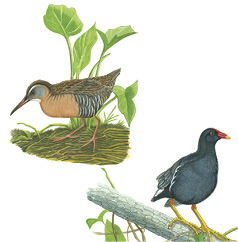
Season
September 11–November 5
November 13–November 26
Hours
One-half hour before sunrise until sunset.
Bag Limit
Clapper/King Rails — 15 counted together daily, only one of which may be a king rail. Possession limit 45, only 3 of which can be king rails.
Sora/Virginia — 25 counted together daily, 75 in possession.
Gallinules (including Common and Purple Gallinule) — 15 per day counted together, 45 in possession.
Attention Rail and Snipe Hunters
In Virginia, non-toxic shot is required for hunting rails, gallinules, and snipe, in addition to all waterfowl, mergansers, and coots.
Snipe
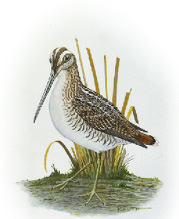
Season
September 25–November 26
December 19–January 31
Hours
One-half hour before sunrise until sunset.
Bag Limit
8 per day, 24 in possession.
Attention Rail and Snipe Hunters
In Virginia, non-toxic shot is required for hunting rails, gallinules, and snipe, in addition to all waterfowl, mergansers, and coots.
Woodcock
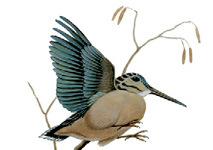
Season
November 10–November 27
December 26–January 21
Hours
One-half hour before sunrise until sunset.
Bag Limit
3 per day, 9 in possession.
September Teal
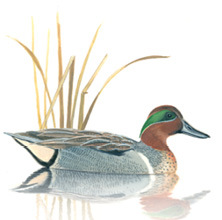
Season: East of I-95
September 17–30
Season: West of I-95
September 21–30
Hours
One-half hour before sunrise until sunset.
Bag Limit
6 per day, 18 in possession.*
(any combination of blue-winged and green-winged teal only)
*Note: Hunters are reminded to positively identify their ducks before shooting, since other species, such as wood ducks, may be in the area.
Special Requirements
In addition to a HIP registration, a federal migratory duck stamp and a Virginia Migratory Waterfowl Conservation Stamp (unless license exempt) are also required to hunt teal during this season.
Mergansers
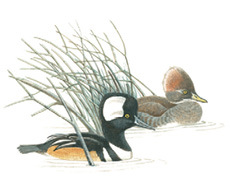
Seasons
October 6–9
November 15–26
December 19–January 31
Bag Limit
5 birds daily, 15 in possession. The restriction on hooded mergansers has been removed. The daily bag limit for mergansers is still 5 total, and can include any combination of hooded, red-breasted and common mergansers.
Ducks
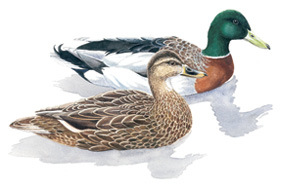
Seasons
October 6–9 (Black duck closed)
November 15–26
December 19–January 31
October 21 & February 3 - Youth and Veterans Waterfowl Hunting Days
Bag Limit
Daily Bag Limit: 6 ducks of any species except for the following restrictions: can include no more than 4 mallards (only 2 hen mallards), 3 wood ducks, 2 black ducks (except closed Oct. 6–9), scaup: 1/day for 40 days (October 6–9, November 15–26, December 19–January 11), and 2/day for 20 days (January 12–31), 2 redheads, 2 canvasback, 1 pintail, 1 mottled duck, 1 fulvous whistling duck, 4 total sea ducks (no more than 3 scoters, 3 eiders [only 1 hen], 3 long-tailed ducks).
Hours
One-half hour before sunrise until sunset.
Closed season on harlequin ducks.
The possession limit is three times the daily bag limit. No person may take more than one daily bag limit in any one day.
Change in area where crippled waterfowl can be pursued while under power. There is no longer a Special Sea Duck Season, and the former “Special Sea Duck Season Zone” has been changed this year. We have renamed this zone as the new “Special Sea Duck Area,” and have changed the boundaries to eliminate the 800-yard buffer area that was in the previous zone. The boundary of this new Special Sea Duck Area is defined as “The ocean waters of Virginia, the tidal waters of Northampton and Accomack counties up to the first highway bridge, and the Chesapeake Bay and each of its tributaries up to the first highway bridge. Back Bay and its tributaries are not included in the special sea duck hunting area.” This change allows hunters to pursue any crippled waterfowl species, not just sea ducks, while under power in this new Special Sea Duck Area. This change has been made as a conservation measure to help recover any crippled waterfowl, and to better clarify where retrieving crippled waterfowl under power is legal.
Coots
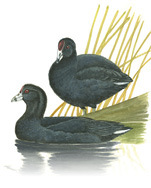
Seasons
October 6–9
November 15–26
December 19–January 31
Bag Limit
15 per day, 45 in possession.
Canada Goose
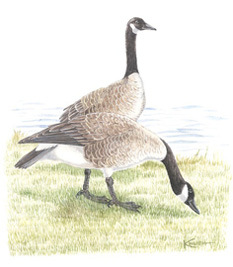
(Includes White-fronted Geese)
Atlantic Population Zone (AP) Seasons
November 22–26
December 23–January 31
Bag Limit
2 geese per day (6 in possession).
Resident Population Zone (RP) Seasons
November 15–26
December 19–February 24
Bag Limit
5 geese per day (15 in possession).
Shooting Hours - All Zones
One-half hour before sunrise to sunset.
Note: All seasons also include White-fronted geese along with Canada geese.
Canada Goose Zones
NOTE: The Southern James Bay Population Zone (SJBP) has been eliminated, leaving only two Canada Goose hunt zones in Virginia. The northern portion of the former SJBP zone (north of I-64) is now included in the Atlantic Population Zone, and the southern portion of the former SJBP Zone (south of I-64) is included in the Resident Population Zone. Therefore, the hunting regulations for these former SJBP areas have changed, so be sure to check the current regulations in the area you are hunting.
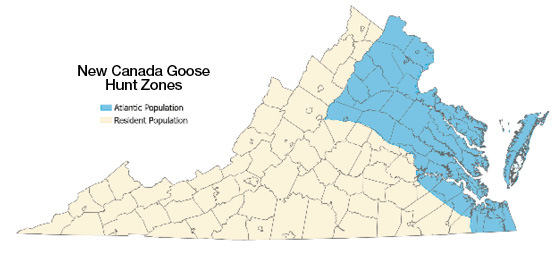
Atlantic Population (AP) Hunt Zone
The area east of the “Blue Ridge” (Loudoun County-Clarke County border) at the West Virginia-Virginia border, south to Interstate 64 (the Blue Ridge line follows county borders alng the western edge of Loudoun-Fauquier-Rappahannock-Madison-Greene-Albemarle and into Nelson counties), then east along Interstate Rt. 64 to Interstate 95 in Richmond, then south along I-95 to Route 460 in Petersburg, then southeast along Route 460 to Route 32 in the City of Suffolk, then south to the North Carolina border.
Resident Population (RP) Hunt Zone
The portion of the state west of the above AP Zone boundary.
Light Goose
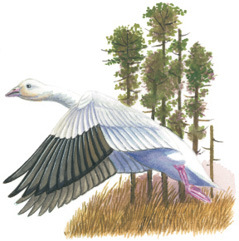
(Greater and Lesser Snow Geese and Ross’s Geese)
Regular Season
October 17–January 31: statewide
Bag Limit
25 per day, no possession limit.
Shooting Hours
One-half hour before sunrise to sunset.
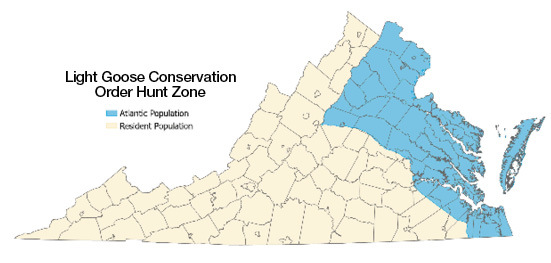
Light Goose Conservation Order
(Conservation Order Zone - see new zone boundary below)
February 1, 2023–April 5, 2024
Bag Limit
No daily or possession limit.
Special Hunting Methods: Electronic calls, unplugged shotguns, and extended shooting hours are allowed.
Shooting Hours: One-half hour before sunrise to one-half hour after sunset.
Registration Required. All hunters who plan to participate in the Light Goose Conservation Order must register either online (www.virginiawildlife.gov/lightgoose) or by phone (866-721-6911), and obtain a Hunter Activity Report prior to hunting. The Hunter Activity Report must be submitted to the Department within two weeks following the close of the season, either through the agency website (above) or by mail (Light Goose Conservation Order, 3801 John Tyler Memorial Highway, Charles City, VA 23030). Registration will begin December 4, 2023.
Conservation Order Zone
NOTE: Same as the new AP Canada Goose Zone identified in blue on the map below — the area east of the “Blue Ridge” (Loudoun County-Clarke County border) at the West Virginia-Virginia border, south to Interstate 64 (the Blue Ridge line follows county borders alng the western edge of Loudoun-Fauquier-Rappahannock-Madison-Greene-Albemarle and into Nelson counties), then east along Interstate Rt. 64 to Interstate 95 in Richmond, then south along I-95 to Route 460 in Petersburg, then southeast along Route 460 to Route 32 in the City of Suffolk, then south to the North Carolina border.
September Canada Goose
Season
September 1–25
Hunt Zone
Statewide.
Hours: East of I-95
September 1–16
- One-half hour before sunrise to one-half hour after sunset.
September 17–25
- One-half hour before sunrise to sunset.
Hours: West of I-95
- September 1–20
- One-half hour before sunrise to one-half hour after sunset.
- September 21–25
- One-half hour before sunrise to sunset.
Bag Limit
10 per day, 30 in possession.
September Canada goose hunting is not permitted within the boundaries of the Amelia and Dick Cross Wildlife Management Areas.
Special Requirements
In addition to a HIP registration, a federal migratory duck stamp and a Virginia Migratory Waterfowl Conservation Stamp (unless license exempt) are also required to hunt geese during this season.
Atlantic Brant
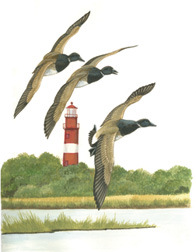
Seasons
December 23–31
January 11–31
Bag Limit
1 per day, 3 in possession.
Tundra Swan
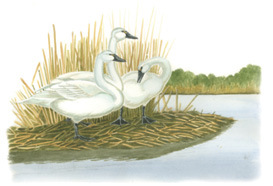
Seasons
November 15–January 31
Bag Limit
1 per permittee per season.
Tundra Swan Hunt Area
Hunting will be permitted in all counties and portions of counties lying east of I-95 and south of the Prince William/Stafford County line in Chopawamsic Creek at Quantico Marine Corps Base.
Tundra Swan Permit
Before any person may hunt tundra swans in Virginia, he or she must first apply for and receive a tundra swan hunt permit. Permits are issued through a special drawing. The deadline to submit applications for this drawing is September 20, 2023. The Department will issue no more than 532 swan hunting permits. The drawing is open only to holders of a valid Virginia hunting license. A hunter may only apply for a swan permit online through the Department’s website at www.gooutdoorsvirginia.com.
Swan hunting permits are non-transferable and are valid for use only by the person to whom issued. Permits must be in the immediate possession of the permit holder while swan hunting. Immediately at the time and place of kill successful permittees must cancel their swan hunting permit by permanently recording the month and day of kill and by attaching the permit to the swan as instructed. The DWR is required to obtain hunter participation and harvest information to offer this tundra swan hunting season. Hunters are required to complete the tundra swan hunt questionnaire (survey) and submit their results to the Department by February 15, 2024. Those who fail to submit their results are ineligible for future drawings.

