
Introduction
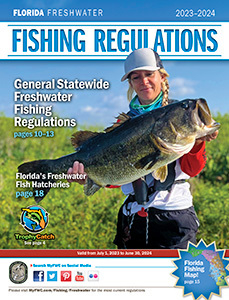
This free booklet is your guide to Florida’s freshwater fishing laws and regulations. The Florida Administrative Code is the final authority on fishing laws (www.FLrules.org). The publisher strives to ensure this information is accurate but assumes no liability for errors that may occur. In addition, rules can change between publications. Contact the Florida Fish and Wildlife Conservation Commission (FWC) if you have questions not adequately covered in this booklet. This publication is valid from July 1, 2023, to June 30, 2024.
Florida remains the “Fishing Capital of the World,” due to great resources and responsible management. We consider the quality of life that is associated with recreational activities and living in a healthy environment to be extremely important to Floridians and visitors and are also striving to make Florida the undisputed “Bass Fishing Capital of the World.”
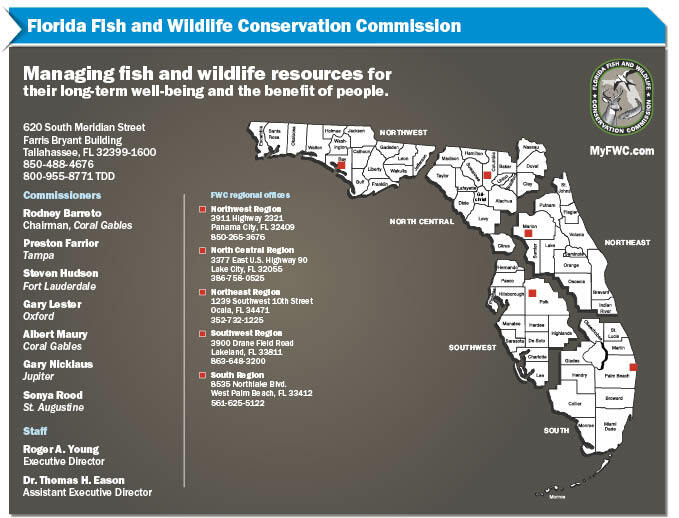
The FWC uses the best scientific management possible to help fulfill its mission of “Managing fish and wildlife resources for their long-term well-being and the benefit of people.” To fund those efforts, the Legislature sets fishing license fees and exemptions, as well as penalties for violating fish and wildlife conservation laws. State law guarantees money from the sale of fishing licenses goes to the FWC and cannot be diverted.
In 1950, Congressmen Dingell and Johnson, at the request of anglers and the fishing industry, created the Federal Aid in Sport Fish Restoration (SFR) program, wherein fishing tackle was assessed an excise fee and the monies returned to the states for fish restoration projects. The “Wallop-Breaux” amendment in 1984 added import duties on sport fishing equipment, pleasure boats and yachts as well as taxes on motorboat fuels. The result is one of the most successful “user-pays, public-benefits” programs in the world, with taxes from the sale of outdoor recreation supplies enhancing and promoting the resource.
Fifteen percent of Florida's SFR funds went to boating access — building and repairing ramps and courtesy docks. The remainder went to fresh and saltwater fisheries conservation projects such as habitat restoration, fish stocking, artificial reefs construction and youth fishing clinics.
The FWC encourages all anglers to buy a license (GoOutdoorsFlorida.com). Even if you are legally exempt, you can contribute to the future of our fisheries resources by buying a license and helping the FWC keep your federal tax dollars in Florida to support sportfish restoration.
Recreational fishing is an enjoyable, wholesome experience that reflects a happy and healthy lifestyle. Moreover, it is the number 1 gateway activity to get youth connected to nature in active outdoor recreation, which can reduce obesity, improve grades and, most of all, add enjoyment to their lives.
The FWC is working hard to ensure safe and sustainable recreational fishing for all of our citizens and guests and depends on your license fees to make sure there are fish for tomorrow.